
Planetek Hellas launches OPTISAT CubeSat as part of Greek Microsatellite Programme
Planetek Hellas announces the successful launch of OPTISAT, a 6U CubeSat mission designed, developed and to be operated by the company, aimed at demonstrating advanced secure optical satellite communications combined with on-board Earth Observation data processing capabilities.
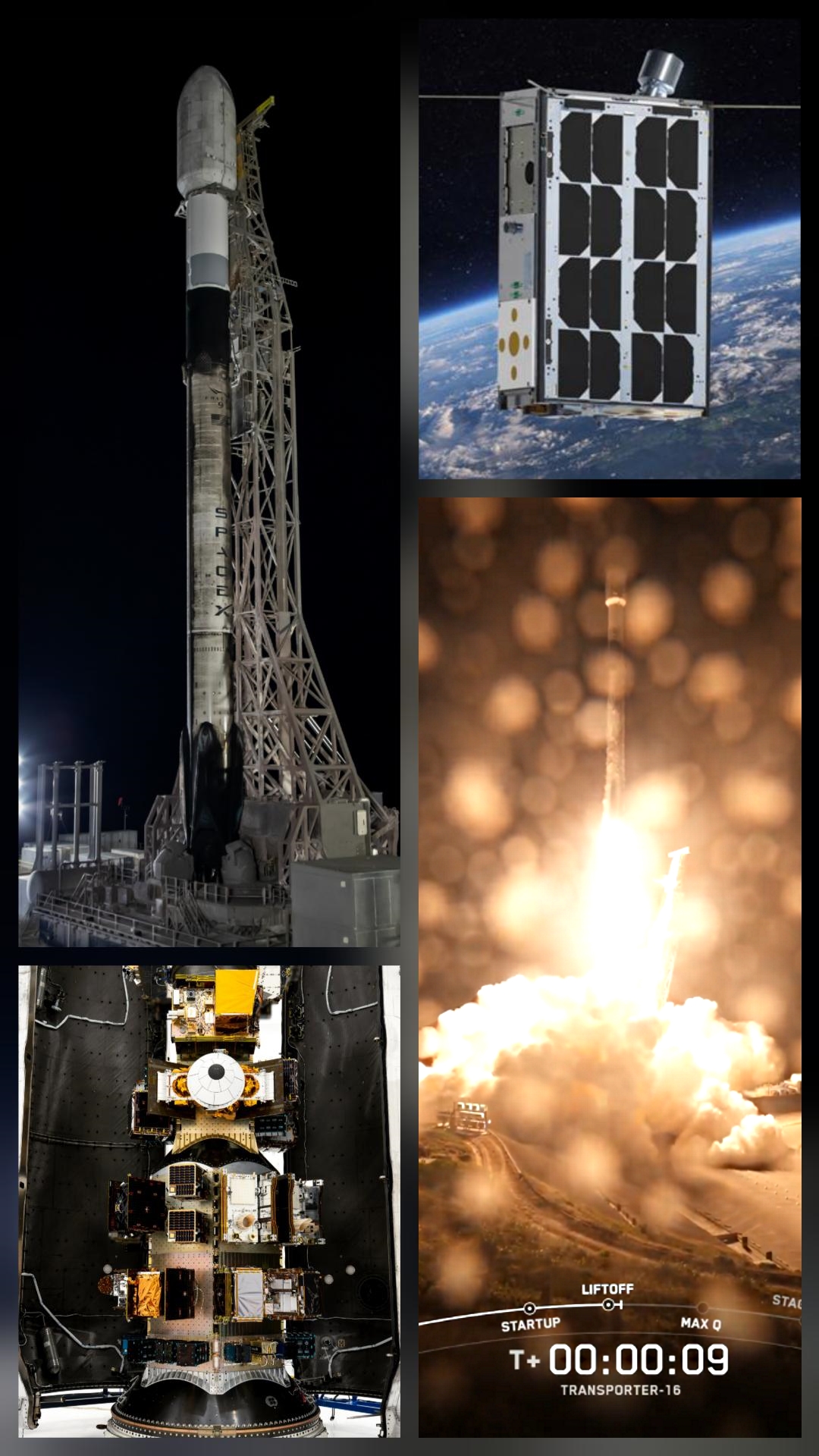
The launch took place on 30 March 2026 at 14:00 (Athens time) from Vandenberg Space Force Base in California, on a Falcon 9 rocket part of Transporter 16 mission of SpaceX.
Strengthening national and European space capabilities
 The mission is implemented under contract with the European Space Agency (ESA) and forms part of the Greek National Microsatellite Programme, designed by the Ministry of Digital Governance and Artificial Intelligence and implemented under the current political leadership of Minister Dimitris Papastergiou, through the General Secretariat for Telecommunications and Posts. The Programme is funded by the European Union’s Recovery and Resilience Facility and contributes significantly to strengthening Greece’s national space capabilities and its position within the European space ecosystem.
Secure space communications
OPTISAT is among the first Greek CubeSat missions to demonstrate secure laser-based communications from orbit. The satellite carries a compact optical communication terminal for micro- and nanosatellites provided by TESAT (SCOT20). By using optical signals instead of radio frequencies (RF), the mission targets data rates of up to 1 Gbps, offering enhanced protection against interference and interception. These capabilities are critical for missions requiring both high-speed and secure data transmission. The SCOT20 system complies with key international optical communication standards, including SDA and ESTOL.
In parallel, the mission includes on-board data processing capabilities, enabling Earth Observation data to be processed directly in orbit and significantly reducing the time from data acquisition to actionable information.
Statements
Mr. Frédéric Rouesnel at ESA, stated “OPTISAT is a key example of Greece’s ever-increasing innovation in space. Demonstrating advanced optical communication capabilities, while simultaneously improving data-transfer efficiency in Earth Observation testifies to Planetek’s ambitious vision for Greece’s industrial competitiveness. It is a great pleasure for ESA to walk alongside the team in our joint aim in elevating the future of Europe.”
Prof. Konstantinos Karantzalos, Secretary General for Telecommunications and Posts, Ministry of Digital Governance and Artificial Intelligence, mentioned “The OPTISAT mission marks a significant step toward the development of advanced space-to-Earth optical communications, a cutting-edge technology increasingly recognized globally as a key pillar for secure, ultra-high-capacity connectivity. Greece is strategically investing in both the space segment and ground-based optical infrastructure, shaping an integrated ecosystem that extends high-capacity networks beyond traditional terrestrial limits. In doing so, we enhance connectivity across the planet and enable new applications in areas such as security, civil protection and critical infrastructure.”
Stelios Bollanos, CEO & Co-Founder of Planetek Hellas, added “With OPTISAT, we demonstrate our ability to develop critical space technologies combining secure communications and operational Earth Observation data exploitation. At the same time, the mission significantly contributes to the development of our engineering team in Athens, building strong capabilities for future, more complex national and European end-to-end space systems of dual use, serving both civil and defence applications.”
The Optisat mission also serves as a platform for collaboration with both Greek and European partners. In Greece, Planetek Hellas is working with the University of Piraeus Digital Systems Lab, JNP Consultancy Services, and BitRezus (ESA BIC Greece) to integrate advanced cybersecurity, blockchain, and AI-based technologies. At the European level, the mission is supported by leading suppliers including TESAT, EnduroSat, SkyLabs, D-Orbit and Planetek Italia, bringing together a strong industrial and technological ecosystem.