
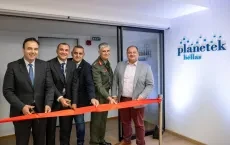
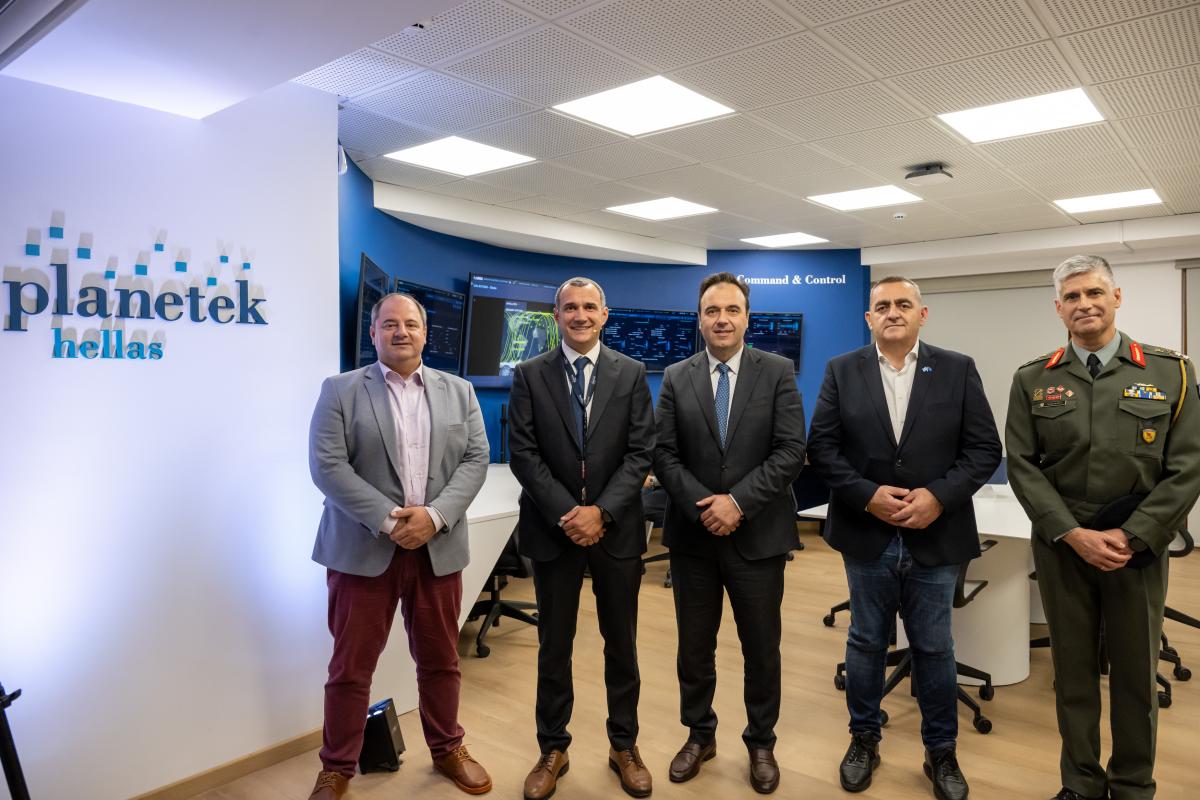
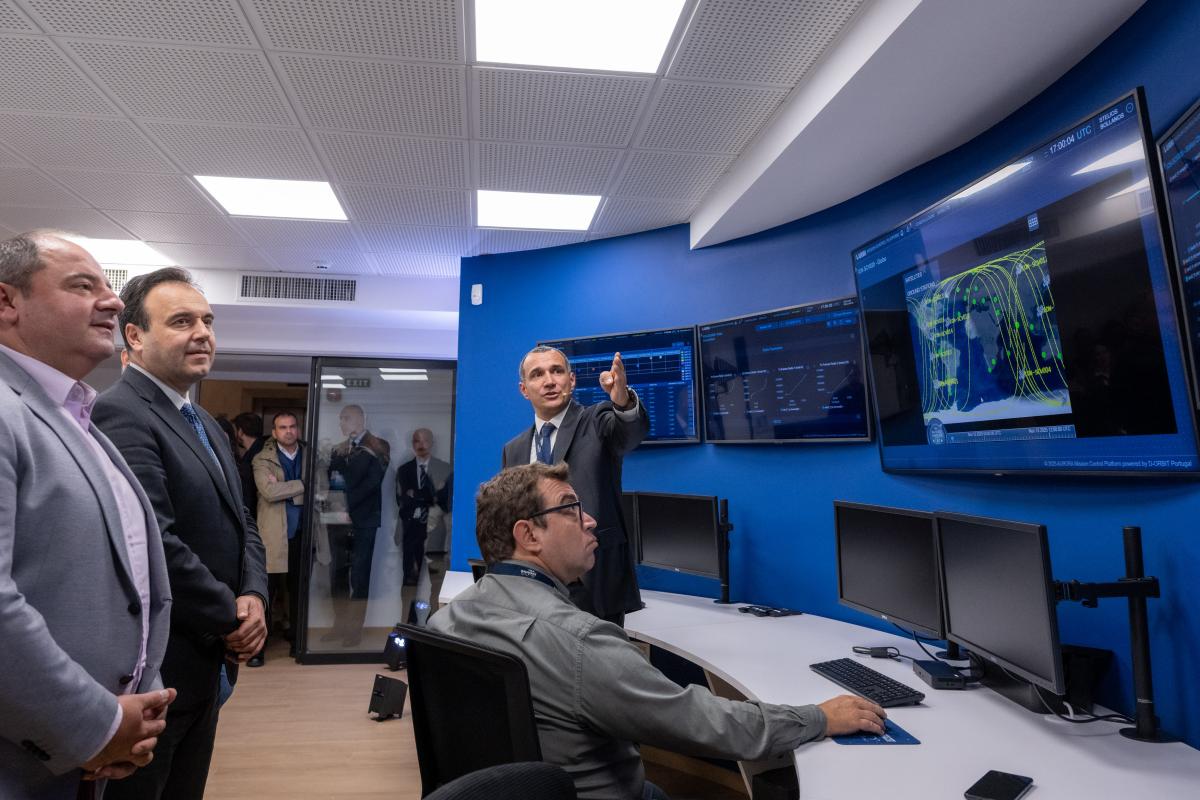
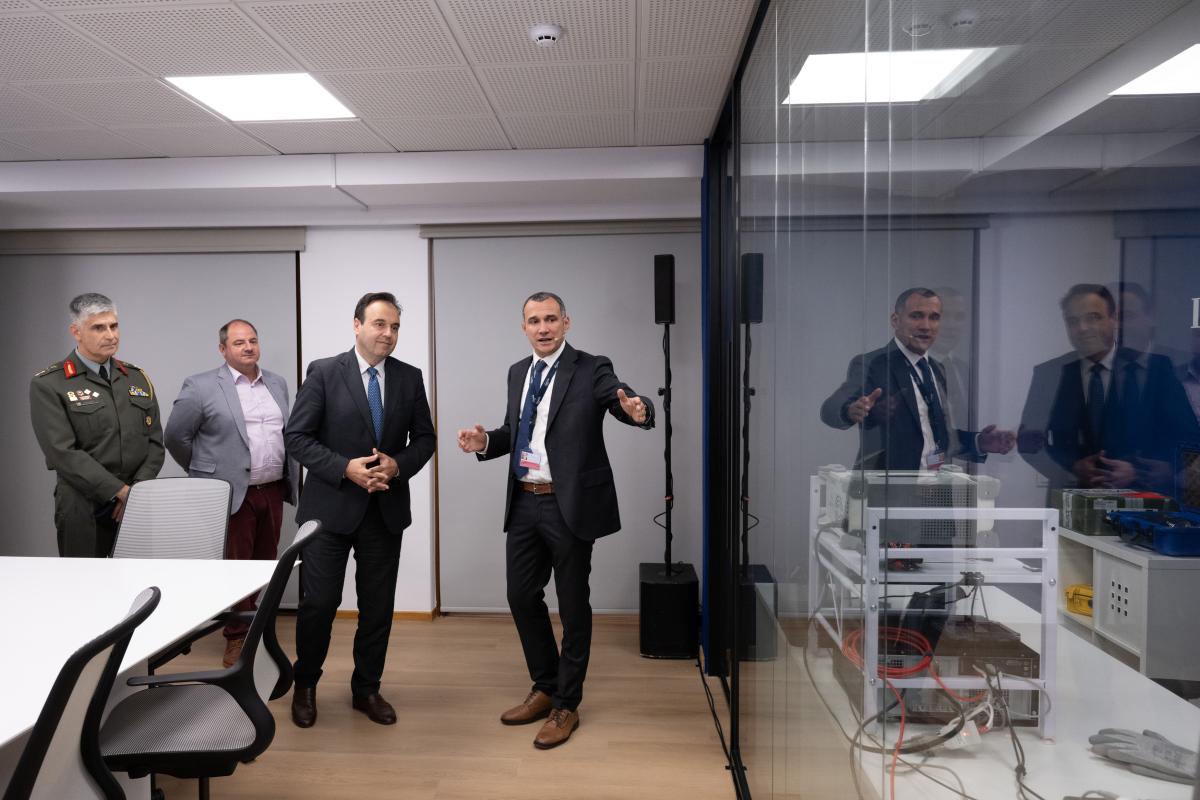
Athens, 12 November 2025 – Planetek Hellas inaugurated its new Satellite Command and Control Center (C2), a state-of-the-art infrastructure at the forefront of Greek space technology, enabling the operational management of space missions and the real-time exploitation of satellite data.
This new facility plays a decisive role in enhancing the country’s technological and operational autonomy in the Space sector, while strengthening Greece’s position within the European space ecosystem.
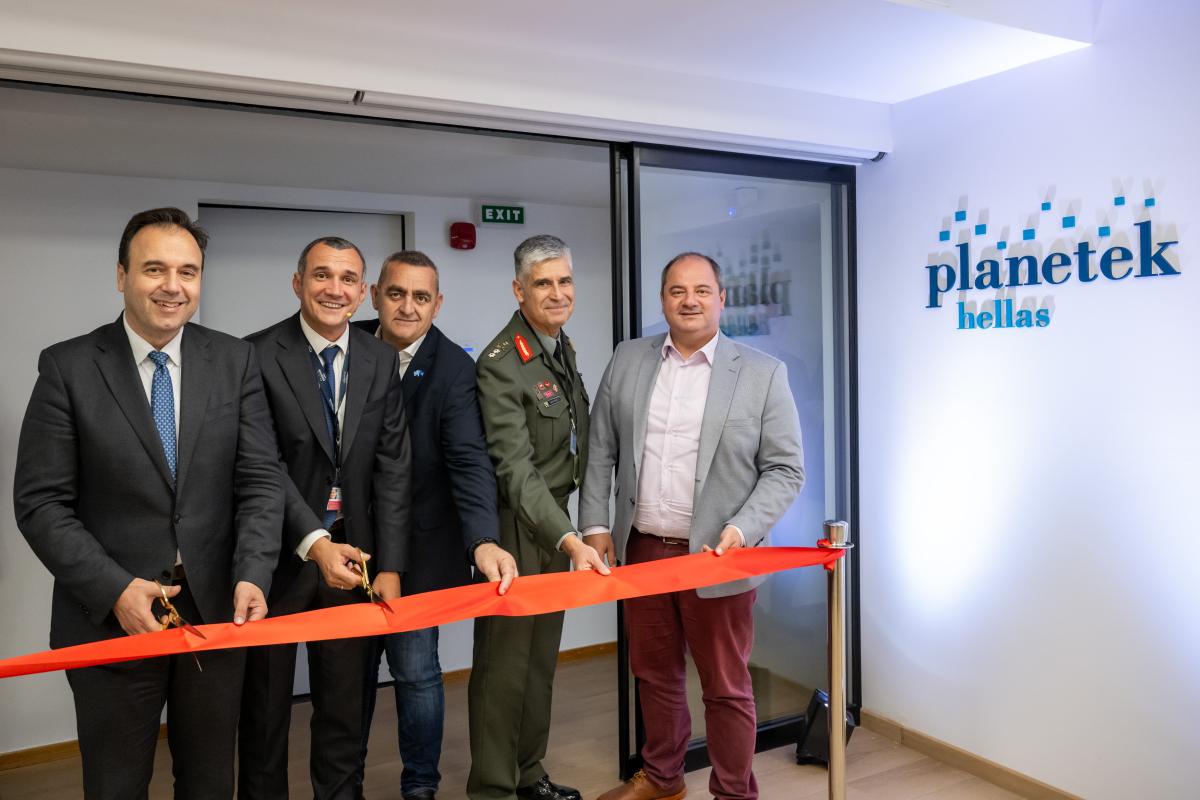
The inauguration ceremony was led by the Minister of Digital Governance, Mr. Dimitris Papastergiou. The event was also attended by the Secretary General of the Ministry of Digital Governance, Mr. Konstantinos Karantzalos, as well as representatives from the Hellenic National Defence General Staff, the General Secretariat for National Security, the Hellenic Defence Innovation Center and the Hellenic Space Center, underlining the strategic importance of space technologies for national innovation and development.
With nearly 20 years of experience, Planetek Hellas has established itself as one of the leading Greek companies in space technologies and applications. The new Center serves as a critical hub where Greek engineers design space missions, operate satellites in orbit, and leverage artificial intelligence, edge computing, big data and supercomputing to transform satellite data into actionable insights for civil protection, national security and environmental monitoring.
During the event, the Minister of Digital Governance, Dimitris Papastergiou, stated:
"The development of Greek space technology is a strategic priority for our country, directly linked to innovation, security and economic growth. The new Satellite Command and Control Center of Planetek Hellas demonstrates that we have the talent and industrial capabilities to stand as equal partners on the European space map. As the Ministry of Digital Governance, we actively support the growth of the national space ecosystem. This is why participation of Greek companies and the involvement of major international technology groups are prerequisites in every component of the National Microsatellite Program. Through this approach, we create high-value jobs and acquire essential know-how. At the end of November, the first two operational microsatellites, as well as three additional research nanosatellites, will be launched. The Program becomes a reality, marking a major milestone of the Recovery and Resilience Facility and the official presence of Greece in Space."
Secretary General for Telecommunications and Post, Prof. Konstantinos Karantzalos added:
"Greece is taking another decisive step in developing advanced capabilities in space technology and satellite system operations. We invest in human capital and create new prospects for Greek scientists and engineers. In doing so, we strengthen the competitiveness and international presence of the Greek space ecosystem."
Stelios Bollanos, CEO and Co-founder of Planetek Hellas, stated: "With a team of 50 Greek engineers and scientists working every day with passion and expertise, we envision the new Satellite Command and Control Center becoming another step toward the country’s operational autonomy in Space. Today, we demonstrate that Greece has the human talent, the know-how and the industrial backbone to design, operate and exploit satellite missions from Greek soil. For us at Planetek Hellas, this Center is not just an infrastructure; it is the foundation upon which the next generation of national and European space missions will be built, enhancing the security, development and resilience of both Greece and Europe."
Innovation with a Greek Signature
Planetek Hellas is one of the most dynamic innovation actors in the Greek space industry, playing an active role in major national projects such as the Greek cubesat “OptiSat” with secure laser communication, the €11.5M Greek Governmental Hub for Satellite Data, and the Payload Data Ground Segment (PDGS) for the primary processing of optical satellite data of the national space program.
These projects, part of the national investment supported by the Greece 2.0 Recovery and Resilience Fund, are implemented with the participation of more than 20 Greek companies and universities, which undertake over 40% of the total technical scope.
Since its establishment, Planetek Hellas has acted as an accelerator for the broader national ecosystem, strengthening the domestic value chain, generating multiplier benefits, and transferring know-how and experience from the European space industry to Greece. This collaborative approach is a cornerstone of Planetek Hellas’ strategy and has significantly contributed to strong partnerships with leading European institutions and industrial players.
With clients and partners such as the European Space Agency (ESA), the European Commission (DG DEFIS), EU SatCen, the European Environment Agency (EEA), Interpol and Frontex, and strategic industrial collaborations with companies such as Airbus, Leonardo, Indra, Rheinmetall and others, Planetek Hellas actively contributes to strengthening European technological sovereignty and Greece’s national space capability.
Furthermore, its close cooperation with the research and academic community, both in Greece and across Europe, reinforces its industrial orientation by enabling technology transfer, the development of new scientists and the continuous evolution of its scientific foundation.
The company follows an industry-driven innovation strategy, emphasizing intellectual property protection and the transformation of research results into globally competitive products. A notable example is the European patent EP3347852 concerning onboard satellite data compression, demonstrating its ability to develop original technologies and secure its intellectual output at the European level.
Strategic Positioning on the European Map
Since early this year, Planetek Hellas has been part of the D-Orbit group, one of the fastest-growing European space companies, in which the FAISTOS Investment Fund has also invested.
The recent strategic integration of Planetek Hellas into D-Orbit marks a major milestone for the company. The new group now includes more than 600 employees and operates a dedicated satellite manufacturing facility, significantly strengthening Greece’s presence on the European space industry map.
The new C2 Center symbolizes Greece as a nation that produces, innovates and participates as an equal player in the new European space era—enhancing the country’s technological autonomy and active role in the international space ecosystem.
Information for the Press:
Martha Mira, Pitch – Public Relations and Strategic Communications
Planetek Hellas, Press Office t. +30 2152157390, info@planetek.gr